2026
Monumental Atmospheres
Worlds that existed long before your players arrived — and will endure long after they leave.
Artstyle
Landscape
Monumental Atmospheres
Defined by vast, graphic environments, a muted color language, and a sense of scale that makes every player feel appropriately small.
The World as the Character
If your game is built on exploration, lore, and the weight of history — if the land itself needs to feel like it has survived wars your players will never fully understand — this is your visual engine. It's perfect for:
Location & Scenario Art: Environments that set a tone before a single mechanic is explained.
World Maps & Region Spreads: Illustrated overviews that feel like artifacts recovered from within the game world.
Rulebook Atmosphere Pages: Full-bleed spreads that make the act of reading feel like discovery.
Scale as Storytelling
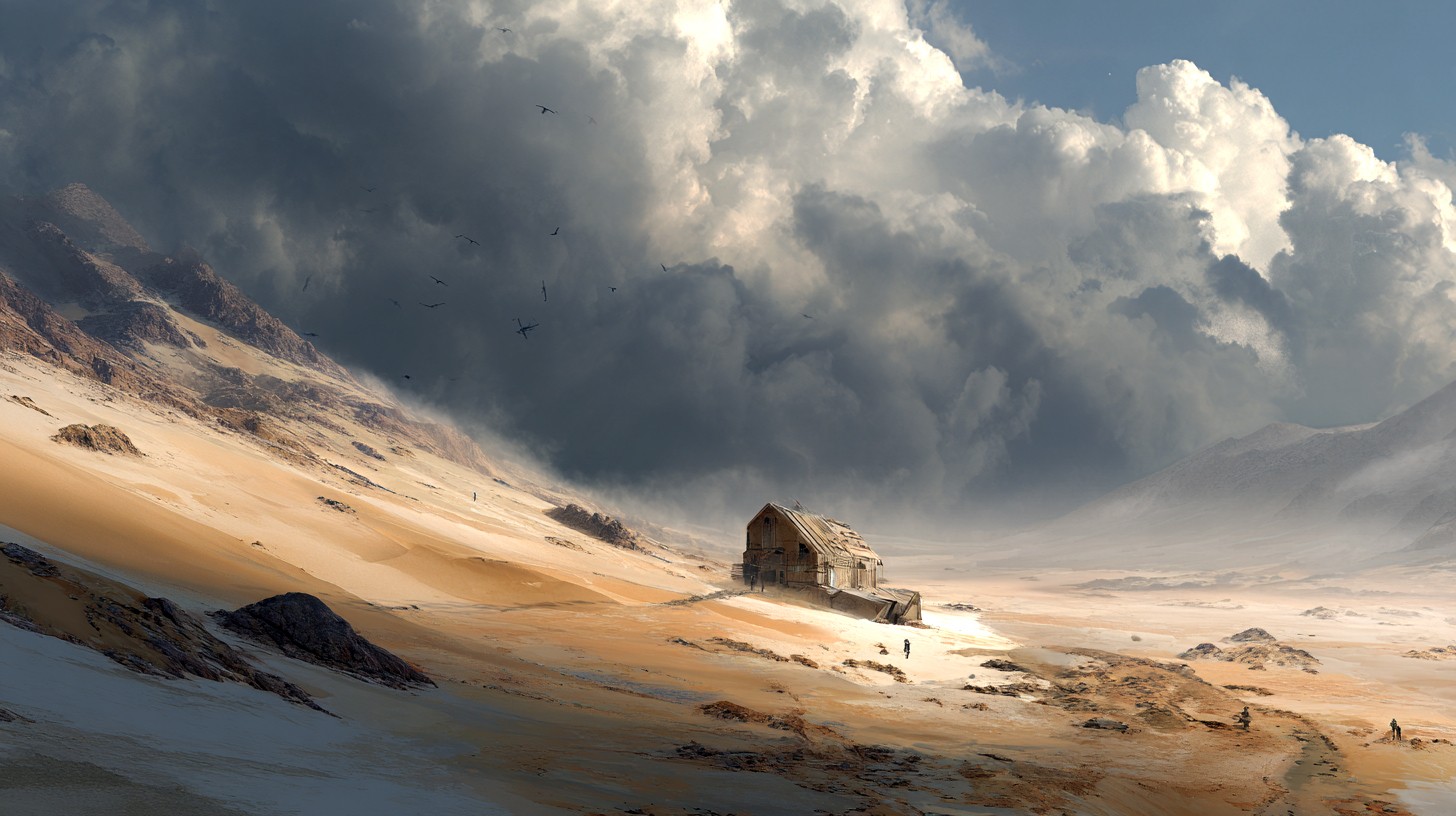
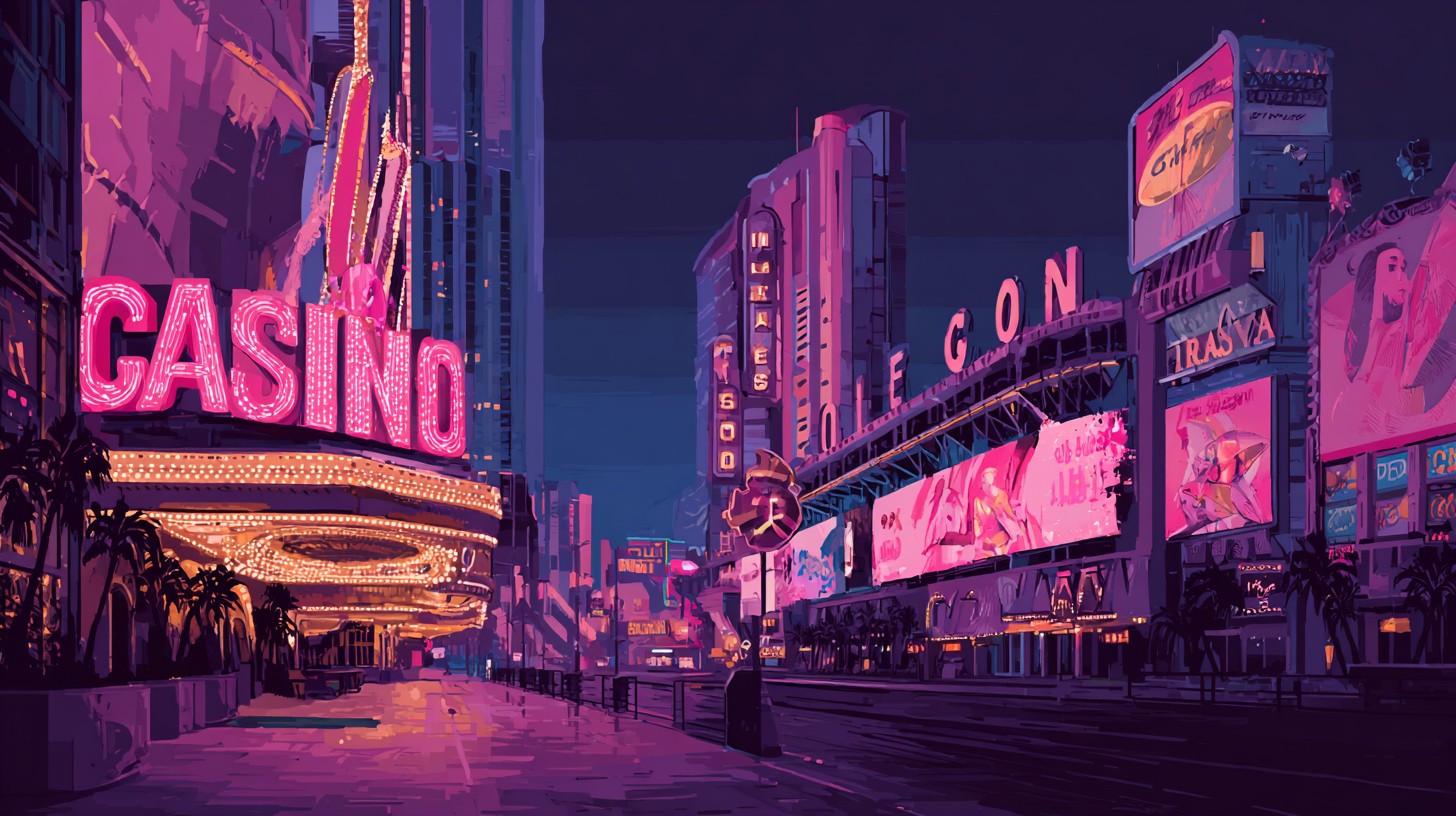
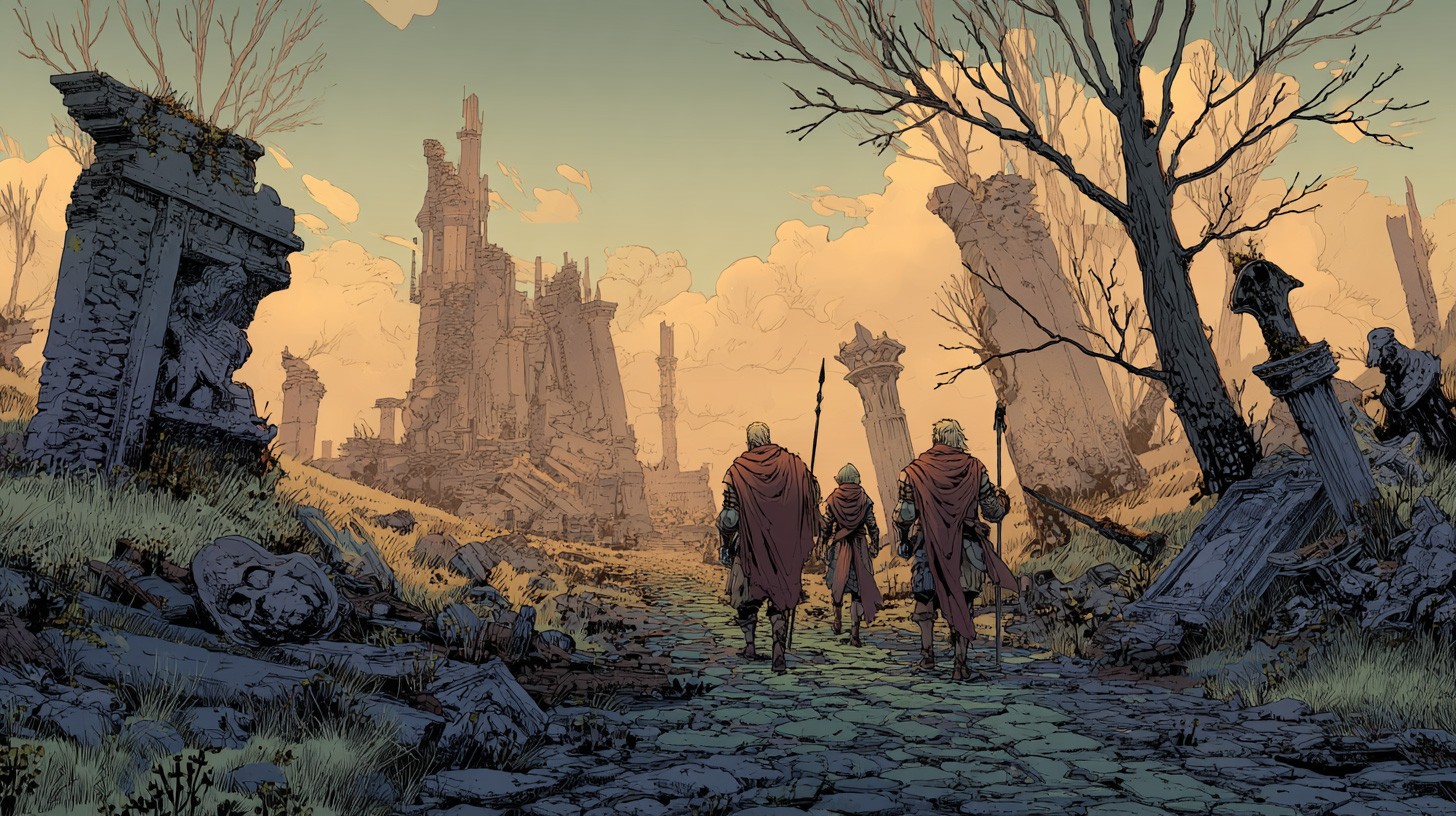
We've calibrated the "Monumental Atmospheres" filter to prioritize environmental grandeur over character detail. It renders ruins, horizons, and forgotten places — not people.
By leaning into graphic ink linework layered over muted, desaturated color fields — the visual language of prestige CRPGs and old-school tabletop sourcebooks — we ensure your world feels inhabited by history, not just by heroes.
The Loneliness Principle
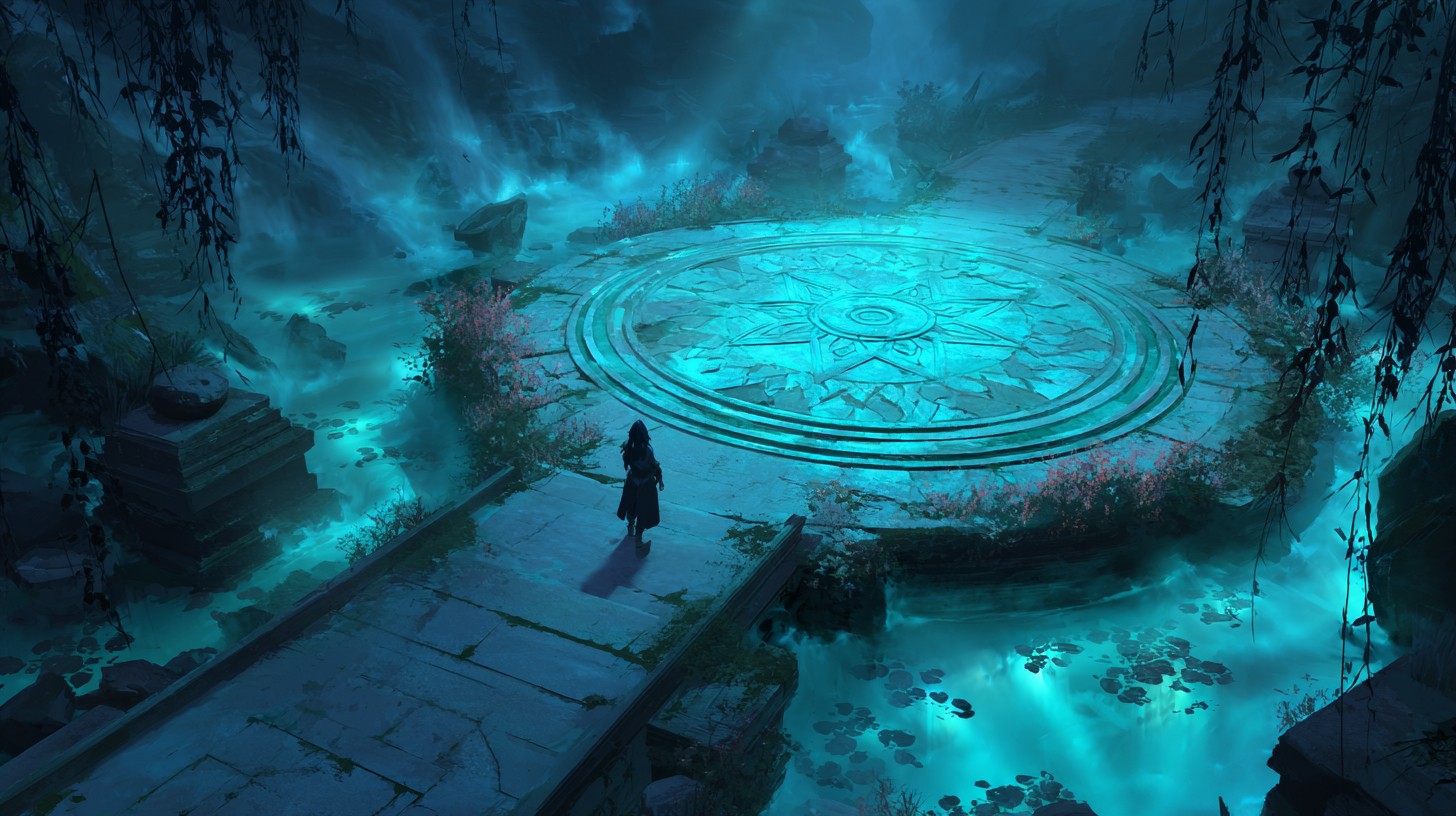
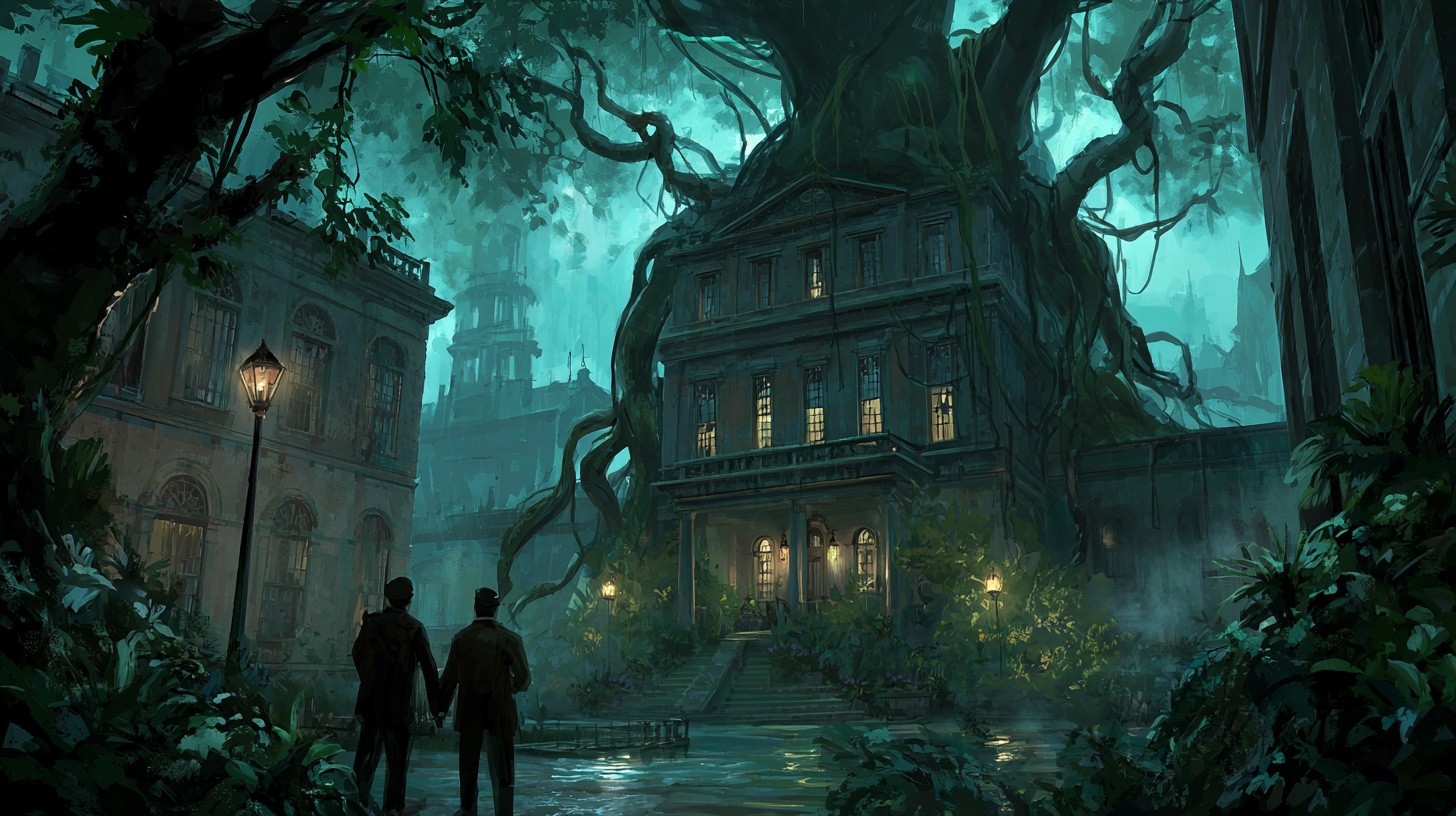
This style works because of what it leaves out. A single figure in a vast ruin says more about the stakes of your game than any amount of combat illustration.
By deliberately minimizing character presence and maximizing environmental detail, this filter creates images that players project themselves into. They don't look at the art — they look through it, into a world they want to explore. That psychological pull is the single most effective Kickstarter hook there is.
The 'Sourcebook' Standard
In a genre crowded with hero portraits and action scenes, "Monumental Atmospheres" is the rare style that makes your world feel real enough to visit.
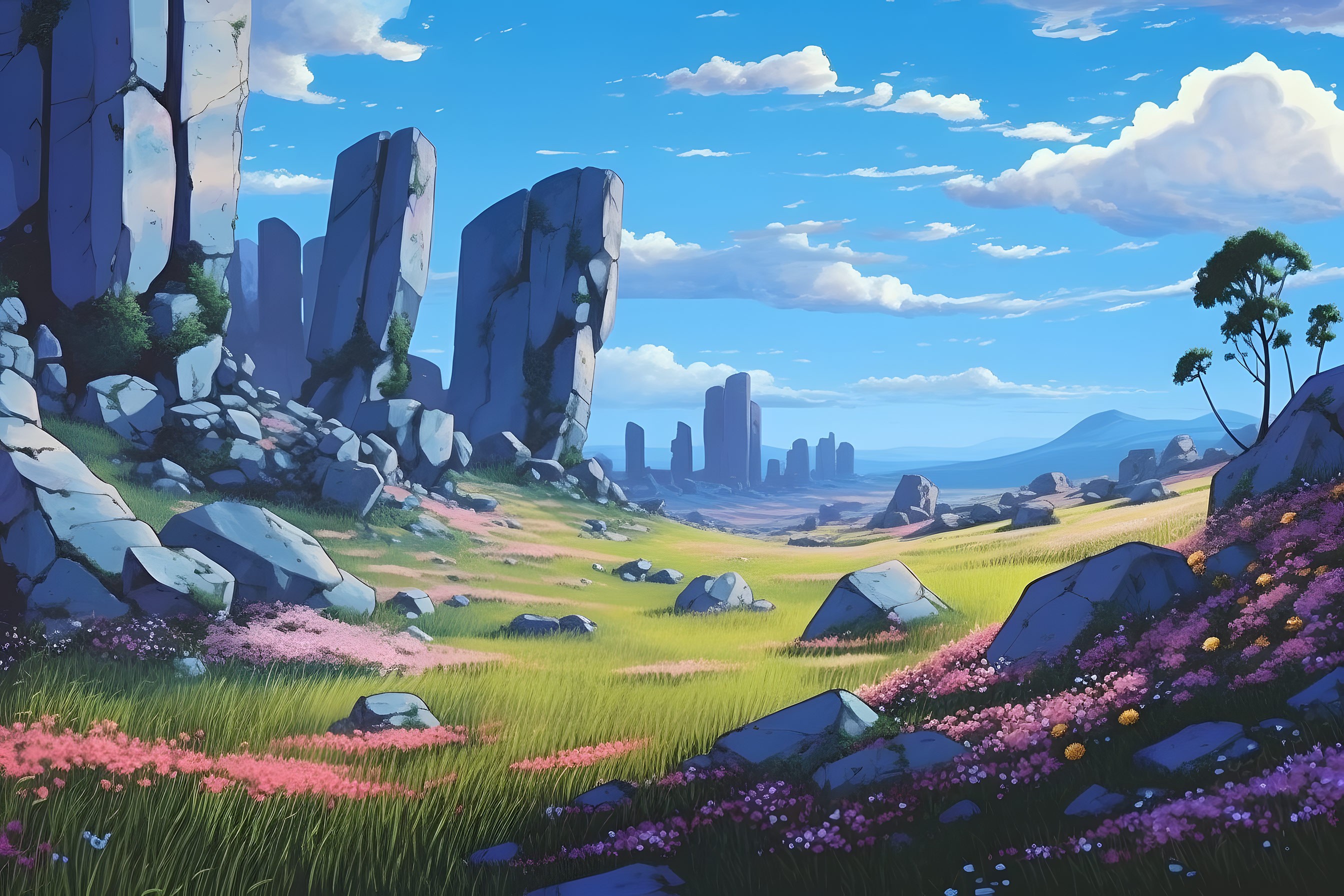
t's built on a graphic, almost printmaking quality — flat ink shapes, careful value separation, and deliberate color restraint — that scales beautifully from digital screens to high-quality book printing. The result looks less like AI generation and more like a dedicated illustrator spent a week on location studies. Your rulebook stops being a manual. It becomes an atlas.
Visual Solutions that scalerks
Selected Styles
UNSPIELBAR Studio
FAQ
01
Why should I pay you instead of just using Midjourney or DALL-E?
02
Is the artwork actually print-ready? (DPI/CMYK)
03
Who owns the rights to the AI-generated illustrations?
04
Can you guarantee style consistency across a 200-card TCG set?
05
How do you handle "AI Hallucinations" like weird hands or artifacts?
06
What is the turnaround time compared to a traditional illustrator?
07
Can I request a specific artist's style?
08
Do I need to know how to prompt?
2026
Monumental Atmospheres
Worlds that existed long before your players arrived — and will endure long after they leave.
Artstyle
Landscape
Monumental Atmospheres
Defined by vast, graphic environments, a muted color language, and a sense of scale that makes every player feel appropriately small.
The World as the Character
If your game is built on exploration, lore, and the weight of history — if the land itself needs to feel like it has survived wars your players will never fully understand — this is your visual engine. It's perfect for:
Location & Scenario Art: Environments that set a tone before a single mechanic is explained.
World Maps & Region Spreads: Illustrated overviews that feel like artifacts recovered from within the game world.
Rulebook Atmosphere Pages: Full-bleed spreads that make the act of reading feel like discovery.
Scale as Storytelling
We've calibrated the "Monumental Atmospheres" filter to prioritize environmental grandeur over character detail. It renders ruins, horizons, and forgotten places — not people.
By leaning into graphic ink linework layered over muted, desaturated color fields — the visual language of prestige CRPGs and old-school tabletop sourcebooks — we ensure your world feels inhabited by history, not just by heroes.
The Loneliness Principle
This style works because of what it leaves out. A single figure in a vast ruin says more about the stakes of your game than any amount of combat illustration.
By deliberately minimizing character presence and maximizing environmental detail, this filter creates images that players project themselves into. They don't look at the art — they look through it, into a world they want to explore. That psychological pull is the single most effective Kickstarter hook there is.
The 'Sourcebook' Standard
In a genre crowded with hero portraits and action scenes, "Monumental Atmospheres" is the rare style that makes your world feel real enough to visit.
t's built on a graphic, almost printmaking quality — flat ink shapes, careful value separation, and deliberate color restraint — that scales beautifully from digital screens to high-quality book printing. The result looks less like AI generation and more like a dedicated illustrator spent a week on location studies. Your rulebook stops being a manual. It becomes an atlas.
Visual Solutions that scalerks
Selected Styles
UNSPIELBAR Studio
FAQ
01
Why should I pay you instead of just using Midjourney or DALL-E?
02
Is the artwork actually print-ready? (DPI/CMYK)
03
Who owns the rights to the AI-generated illustrations?
04
Can you guarantee style consistency across a 200-card TCG set?
05
How do you handle "AI Hallucinations" like weird hands or artifacts?
06
What is the turnaround time compared to a traditional illustrator?
07
Can I request a specific artist's style?
08
Do I need to know how to prompt?
2026
Monumental Atmospheres
Worlds that existed long before your players arrived — and will endure long after they leave.
Artstyle
Landscape
Monumental Atmospheres
Defined by vast, graphic environments, a muted color language, and a sense of scale that makes every player feel appropriately small.
The World as the Character
If your game is built on exploration, lore, and the weight of history — if the land itself needs to feel like it has survived wars your players will never fully understand — this is your visual engine. It's perfect for:
Location & Scenario Art: Environments that set a tone before a single mechanic is explained.
World Maps & Region Spreads: Illustrated overviews that feel like artifacts recovered from within the game world.
Rulebook Atmosphere Pages: Full-bleed spreads that make the act of reading feel like discovery.
Scale as Storytelling
We've calibrated the "Monumental Atmospheres" filter to prioritize environmental grandeur over character detail. It renders ruins, horizons, and forgotten places — not people.
By leaning into graphic ink linework layered over muted, desaturated color fields — the visual language of prestige CRPGs and old-school tabletop sourcebooks — we ensure your world feels inhabited by history, not just by heroes.
The Loneliness Principle
This style works because of what it leaves out. A single figure in a vast ruin says more about the stakes of your game than any amount of combat illustration.
By deliberately minimizing character presence and maximizing environmental detail, this filter creates images that players project themselves into. They don't look at the art — they look through it, into a world they want to explore. That psychological pull is the single most effective Kickstarter hook there is.
The 'Sourcebook' Standard
In a genre crowded with hero portraits and action scenes, "Monumental Atmospheres" is the rare style that makes your world feel real enough to visit.
t's built on a graphic, almost printmaking quality — flat ink shapes, careful value separation, and deliberate color restraint — that scales beautifully from digital screens to high-quality book printing. The result looks less like AI generation and more like a dedicated illustrator spent a week on location studies. Your rulebook stops being a manual. It becomes an atlas.
Visual Solutions that scalerks
UNSPIELBAR Studio
FAQ
Why should I pay you instead of just using Midjourney or DALL-E?
Is the artwork actually print-ready? (DPI/CMYK)
Who owns the rights to the AI-generated illustrations?
Can you guarantee style consistency across a 200-card TCG set?
How do you handle "AI Hallucinations" like weird hands or artifacts?
What is the turnaround time compared to a traditional illustrator?
Can I request a specific artist's style?
Do I need to know how to prompt?